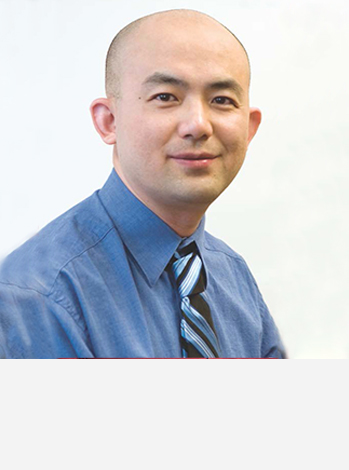
Fang Li , PhD
Professor, Department of Pharmacology
Contact
Email
Office Phone
Titles
Edmund Wallace Tulloch and Anna Marie Tulloch Endowed Chair
Director of Center for Coronavirus Research
Education
Biography
Fang Li is an Edmund Wallace Tulloch and Anna Marie Tulloch Endowed Chair, a Full Professor in the Department of Pharmacology and the Director of the Center for Coronavirus Research. Professor Li is a leading researcher in the coronavirus entry field, having determined many structures of coronavirus spike proteins and discovered the molecular events that lead to coronavirus entry into host cells. His research has been one of the major driving forces behind what we now know about receptor recognition and cell entry of coronaviruses. Moreover, he has developed structure-based strategies for vaccine design and drug development. His research provides foundational knowledge for the field of coronaviruses. Furthermore, Professor Li's research on COVID-19 has elucidated how the pandemic virus infects cells while evading immunity and deciphered the evolution of COVID-19 variants, laying foundations for therapeutic development. Currently Professor Li and his team are developing novel therapeutics against COVID-19 and improving the drug discovery process. In the long run, he would like to extend the scientific discoveries he made in the field of coronavirus to treat other viral infections and human diseases. Please visit Dr. Fang Li's lab website for more information.
Research
In Dr. Li's Laboratory of Structural Biology of Disease, we study the structural and molecular basis of human diseases including virus infections, cancer and other human diseases. Our main line of research examines the invasion mechanisms of viruses. We investigate the structures and functions of virus-surface proteins that mediate receptor recognition and cell entry of viruses. Our other line of research explores the structural and molecular basis for cancer and other human diseases. Specifically, we investigate the structures and functions of human-cell-surface enzymes that are critical for disease mechanisms. Based on these structural and functional studies, we further develop novel therapy strategies to treat human diseases. Our research tools include X-ray crystallography, cryo-electron microscopy, protein biochemistry, and vaccine and drug designs.